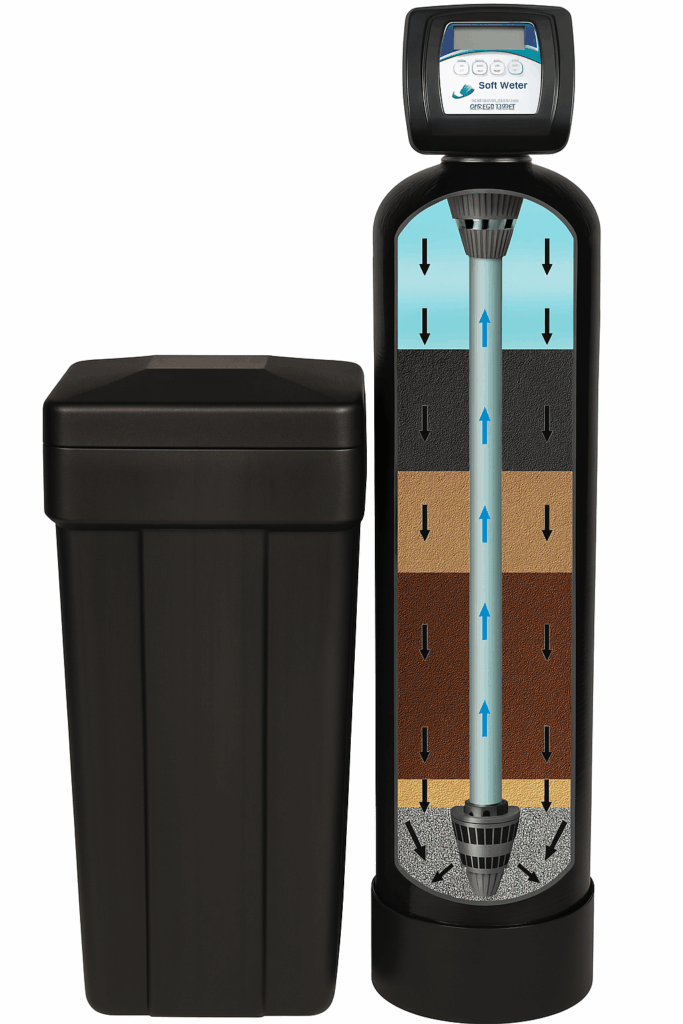
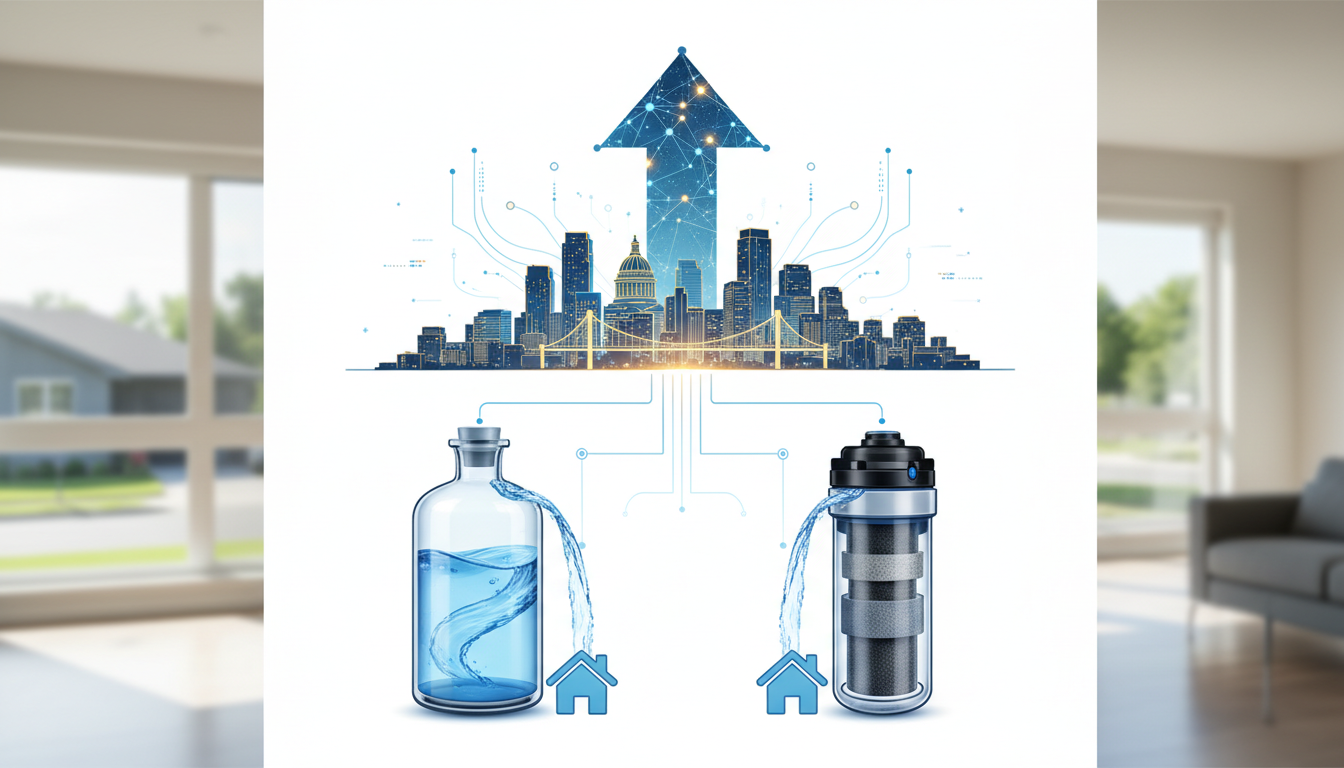
Understanding the Key Difference: Water Softeners vs Water Filtration Systems
Here’s what confuses most homeowners: water softeners and water filtration systems aren’t interchangeable. They solve completely different problems.
Water softeners tackle hardness—removing calcium and magnesium minerals that cause scale buildup and appliance damage. Filtration systems, on the other hand, remove contaminants like chlorine, sediment, and potentially harmful substances from your drinking water.
With 85% of U.S. homes dealing with hard water, this distinction matters more than you’d think. Many Tri-Cities homeowners notice hidden damage from hard water/hard-water-in-the-tri-cities-the-hidden-damage-happening-inside-your-kennewick-richland-and-pasco-home/) affecting their plumbing and appliances, yet they’re unsure which system addresses their specific needs.
As WQA-certified water treatment professionals with over 30 years of experience, we’ve helped thousands of families navigate this decision. The right choice depends on your water’s unique issues and your household’s priorities—and we’ll help you figure that out.
How Water Softeners Work: The Ion Exchange Process Explained
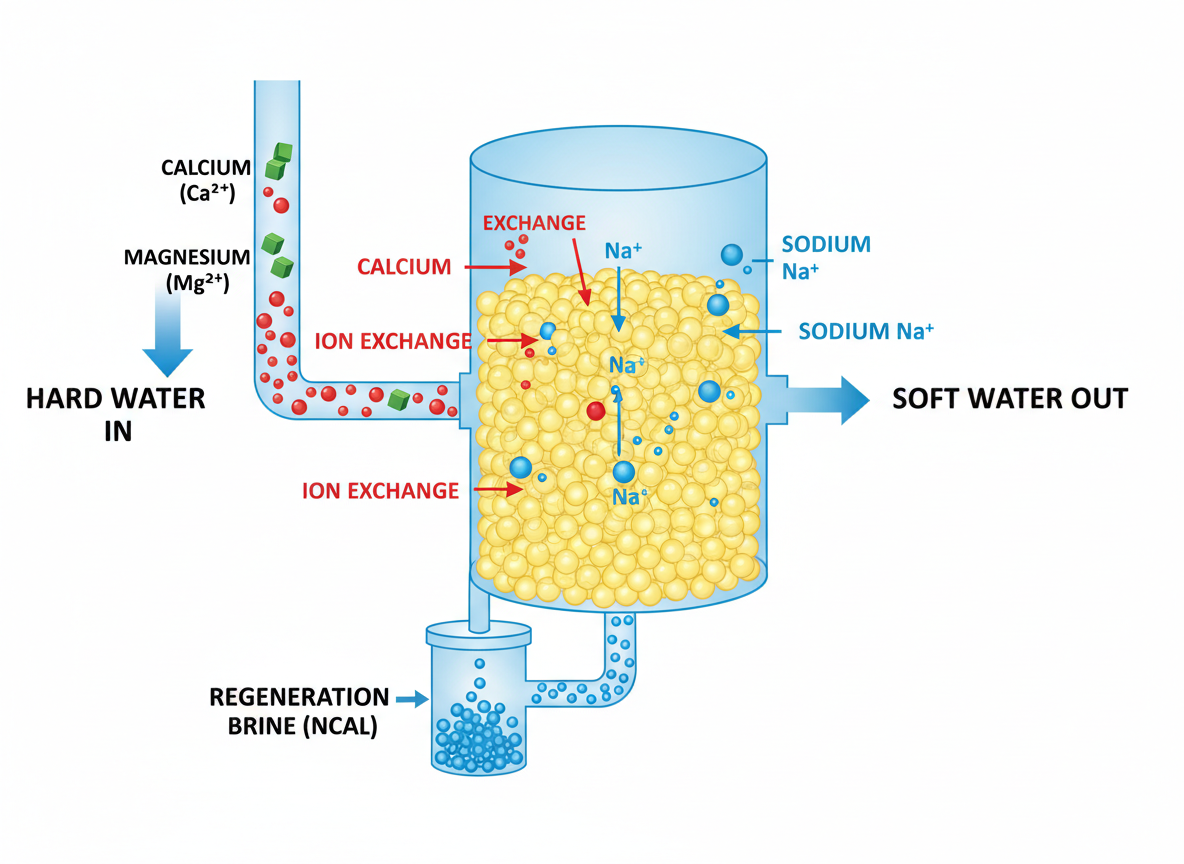
Water softeners tackle hard water through ion exchange—a straightforward chemical swap that happens inside the system’s tank. Here’s the process: hard water flows through a bed of tiny resin beads charged with sodium ions. These beads grab onto calcium and magnesium minerals (the culprits behind hard water), releasing sodium in their place.
Think of it like a molecular trade. The resin beads are magnets for hardness minerals, pulling them from your water while letting softer water continue through your pipes.
Once the resin beads become saturated with minerals, the system regenerates. During this cycle, saltwater flushes through the tank, washing away collected calcium and magnesium and recharging the beads with fresh sodium. Most systems regenerate automatically based on water usage or a timer.
Salt-based vs. Salt-free Systems
Traditional water softeners use salt for regeneration, genuinely removing hardness minerals. Salt-free systems—technically conditioners or descalers—don’t remove minerals but alter their structure to reduce scale formation. They won’t give you truly soft water, though they’re a decent option if you can’t use salt.
Why It Matters
Soft water prevents scale buildup in your water heater, washing machine, and dishwasher. That means fewer repairs, lower energy bills, and appliances that actually reach their expected lifespan. Your plumbing stays clear too, maintaining proper water pressure throughout your home.
How Water Filtration Systems Work: Technologies and Contaminant Removal
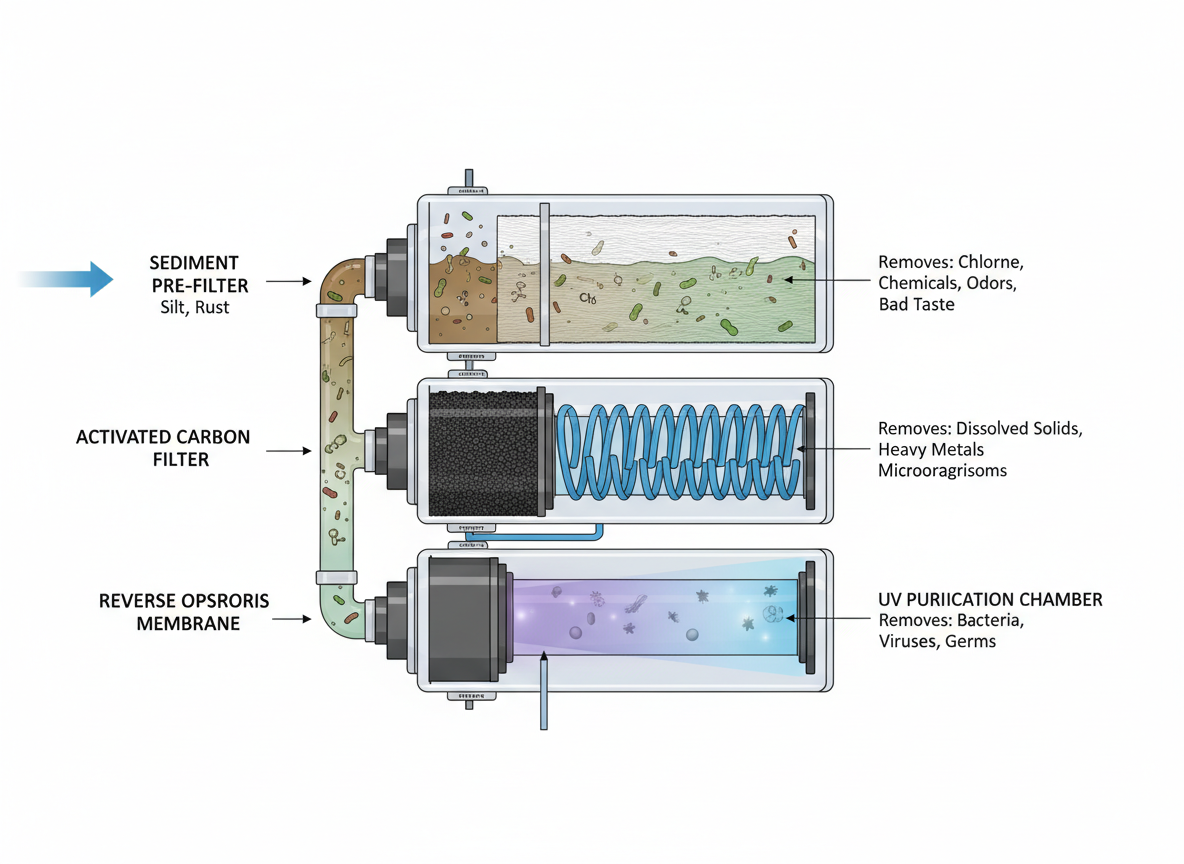
Water filtration tackles a different problem than softening—it removes harmful contaminants rather than minerals. The technology you’ll need depends on what’s lurking in your water.
Activated carbon filters excel at removing chlorine, volatile organic compounds (VOCs), and improving taste and odor. Reverse osmosis systems take things further, filtering out PFAS (forever chemicals), heavy metals like lead and arsenic, and even pharmaceutical residues. UV purification kills bacteria and viruses without adding chemicals, while sediment filters catch rust, sand, and debris before they reach your faucets.
You’ll choose between whole-home filtration—protecting every tap in your house—or point-of-use systems that focus on drinking water. Shield Filtration combines multiple technologies to address contaminants common in the Tri-Cities area.
Multi-stage systems often layer these technologies: sediment pre-filters, carbon filtration, and reverse osmosis working together for comprehensive protection. The health benefits aren’t theoretical—removing lead protects children’s development, while eliminating PFAS reduces cancer risks.
Side-by-Side Comparison: Water Softener vs Water Filtration
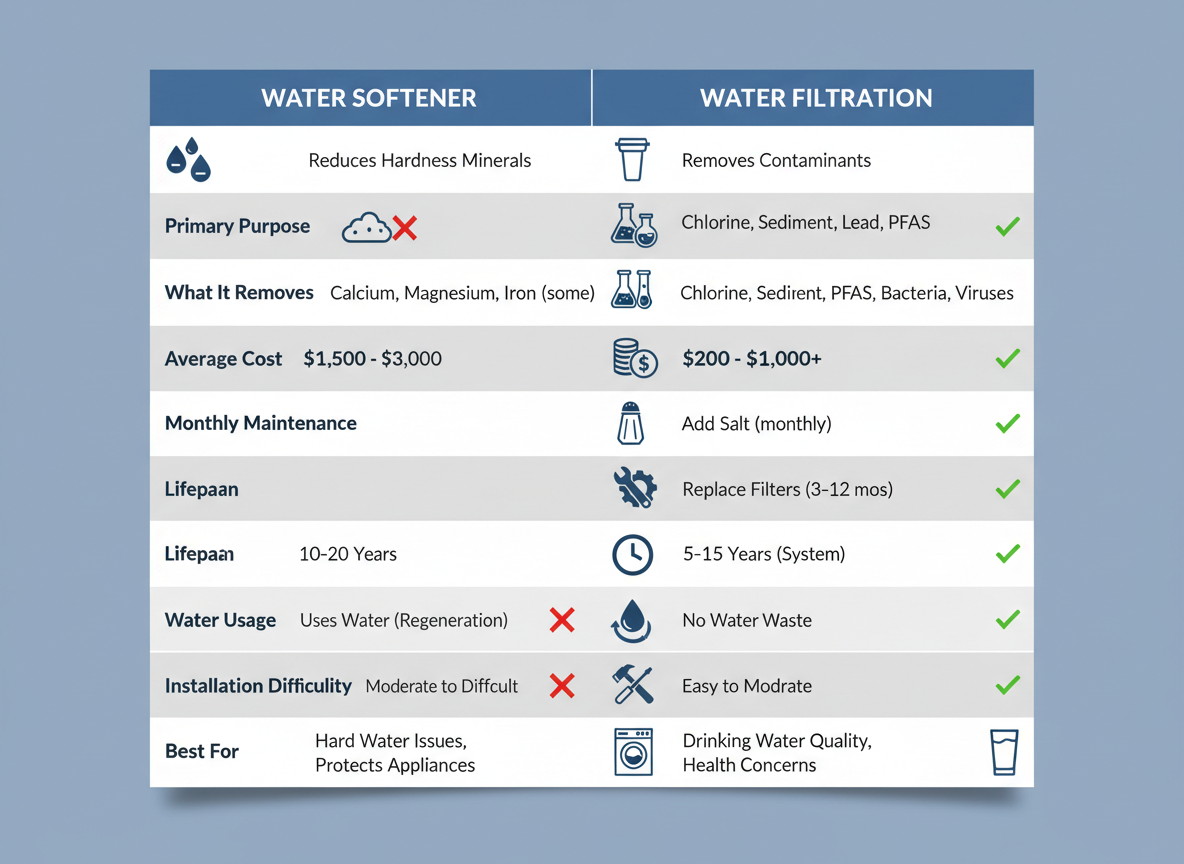
Understanding the differences between these two systems helps you make the right choice for your home’s specific needs.
| Feature | Water Softener | Water Filtration | |———|—————|——————| | Primary Purpose | Removes calcium and magnesium minerals causing hardness | Removes contaminants like chlorine, sediment, bacteria, and chemicals | | Contaminants Addressed | Hard water minerals only | Varies by filter type: sediment, chlorine, heavy metals, pesticides, bacteria | | Initial Cost | $800–$2,500 (whole-house systems) | $200–$4,000+ depending on complexity | | Maintenance | Salt refills every 4–8 weeks, resin bed cleaning annually | Filter replacements every 3–12 months | | Average Lifespan | 15–20 years with proper care | 10–15 years (varies by system type) | | Installation | Requires plumbing modifications, drain line, electrical outlet | Simpler for point-of-use; whole-house needs professional install | | Water Waste | 25–120 gallons per regeneration cycle | Minimal to none (except reverse osmosis) |
Water Softener Pros:
- Protects plumbing and appliances from scale buildup
- Reduces soap and detergent usage by up to 50%
- Eliminates hard water stains on fixtures
- Makes hair and skin feel softer
- Extends appliance lifespan significantly
Water Softener Cons:
- Adds sodium to water (not suitable for drinking on low-sodium diets)
- Requires ongoing salt purchases
- Wastes water during regeneration
- Doesn’t remove chemical contaminants
Water Filtration Pros:
- Removes health-affecting contaminants
- Improves taste and odor
- No salt or chemicals added
- Various options for different budgets
- Can target specific contaminants
Water Filtration Cons:
- Doesn’t address hard water problems
- Filter replacement costs add up
- Some systems reduce water pressure
- Reverse osmosis wastes significant water
From an environmental standpoint, both systems have trade-offs. Softeners discharge salt brine that can affect local water treatment facilities, while they reduce detergent use and extend appliance life. Filtration systems create filter waste but eliminate bottled water consumption.
When considering total ownership costs, factor in installation, maintenance, consumables (salt or filters), and potential savings on cleaning products, appliances, and plumbing repairs. A softener typically costs $200–$400 annually for salt and maintenance, while filtration runs $100–$500 yearly for filter replacements.
Many Tri-Cities homeowners find they need both systems working together—softening handles mineral content while filtration ensures safe, clean drinking water.
Signs You Need a Water Softener vs Water Filtration System
Your home’s plumbing and fixtures can tell you a lot about what’s happening with your water quality. If you’re seeing chalky white buildup around faucets, stubborn soap scum in your shower, or experiencing dry skin and hair after bathing, you’re dealing with hard water—and a softener’s what you need. You’ll also notice your appliances working harder and lasting a shorter time.
Different problems point toward filtration instead. A strong chlorine smell, weird taste, or rusty discoloration means contaminants are getting through. If you’ve got health concerns about PFAS, heavy metals, or other pollutants, filtration addresses those issues directly.
Here in the Tri-Cities area—Kennewick, Richland, and Pasco—we see varying water conditions depending on your source and location. Walla Walla and Yakima homeowners face their own unique challenges too. That’s why professional water testing beats guessing every time. Our Expert Plumbing Services Water Treatment Solutions include comprehensive testing that pinpoints exactly what’s affecting your water—and what’ll fix it. Sometimes you need both systems working together.
Combination Systems: When You Need Both Water Softening and Filtration
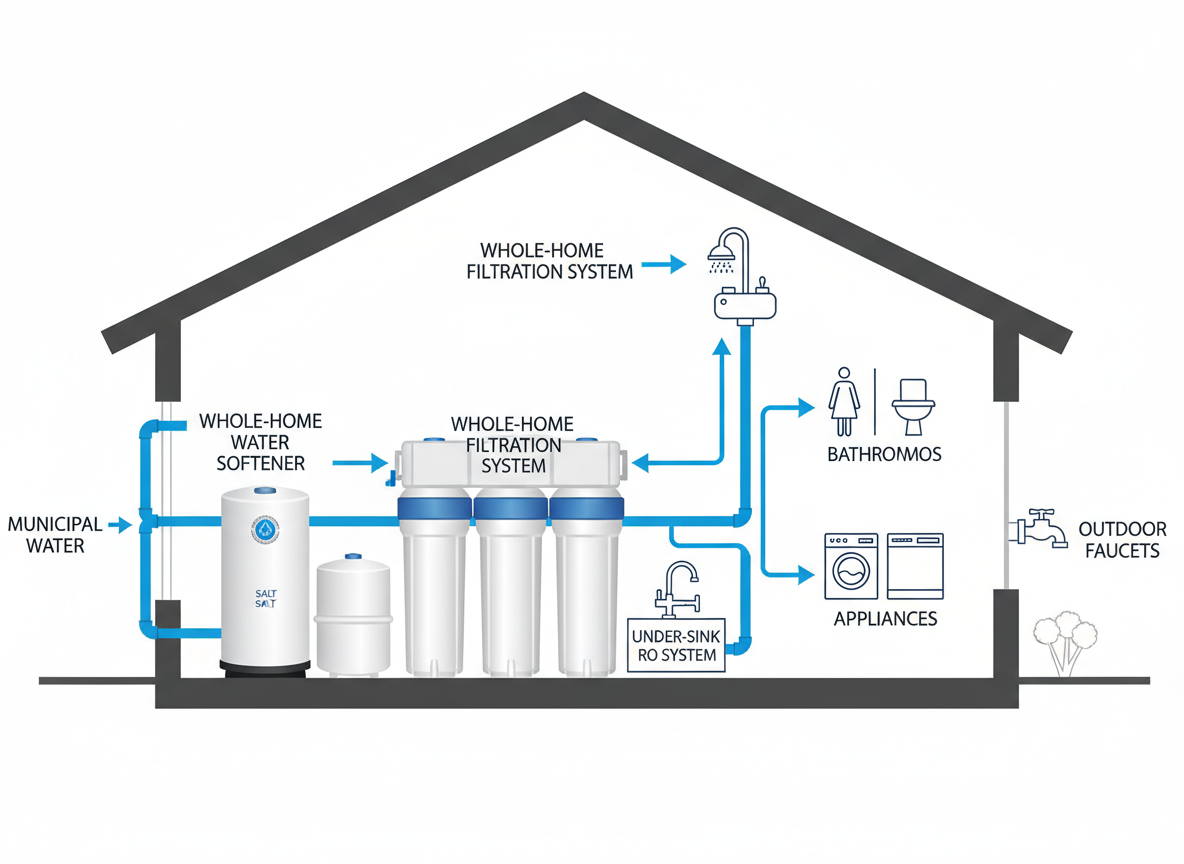
Most homes in the Tri-Cities area face both hard water minerals and contaminants like chlorine or sediment. That’s where combination systems shine. By pairing a whole-home water softener with a multi-stage filtration setup, you’ll tackle scale buildup while removing chemicals and particulates that affect taste and safety.
The most effective configuration places the softener first—removing calcium and magnesium—followed by filters that handle chlorine, iron, and other impurities. This sequence protects your filtration components from scale damage while extending their lifespan.
While the upfront investment runs higher, you’re getting complete water treatment that addresses every concern. Your family gets healthier water, your appliances last longer, and you’ll spend less on soap and cleaning products. It’s comprehensive protection that actually pays for itself over time. Learn more about finding the best choice in softening and filtration for your specific water conditions.
Making Your Decision: Which System is Right for Your Home?
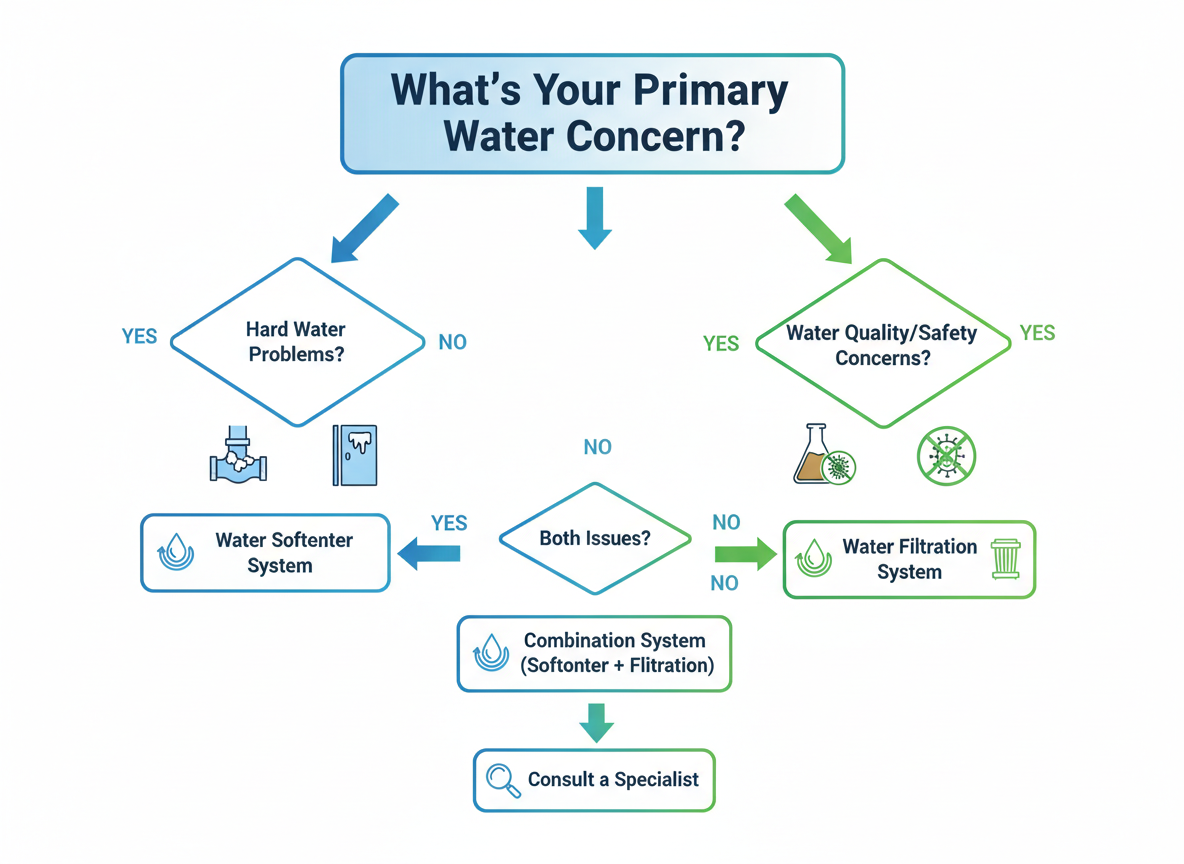
Start with a professional water test—it’ll reveal exactly what you’re dealing with. If you’re battling soap scum, scale buildup, and appliance damage, a water softener tackles hard water at its source. Spotting chlorine taste, sediment, or contaminants? Filtration’s your answer. Many Tri-Cities homeowners discover they need both systems working together for complete protection.
Budget-wise, consider the long-term savings. A water softener can extend your water heater’s lifespan by 30-50%, paying for itself through reduced energy bills and fewer appliance replacements. Professional installation typically runs smoother than DIY attempts, especially for whole-home water systems that require proper sizing and plumbing knowledge.
Maintenance matters too. Softeners need salt refills monthly, while filters require cartridge changes every 3-6 months. Both investments protect your family’s health and your property’s value.
Not sure which system fits your situation? Soft Water Specialists offers free water testing throughout Kennewick, Richland, and Pasco. We’ll analyze your specific water chemistry and recommend solutions tailored to your needs and budget—no cookie-cutter answers, just honest expertise.
Frequently Asked Questions
Can a water softener remove chlorine and other contaminants?
No, water softeners don’t filter out chlorine, chemicals, or other contaminants. They’re designed specifically to remove calcium and magnesium minerals that cause hardness. If you’re concerned about chlorine taste, chemical odors, or other water quality issues, you’ll need a filtration system.
Can a water filter soften hard water?
Standard water filters can’t soften water because they don’t remove the hardness minerals. You need an ion exchange water softener to tackle calcium and magnesium. Filters handle different problems—like sediment, chlorine, and various contaminants.
Do I need both a water softener and a water filter?
It depends on your specific water quality. Many homeowners in the Tri-Cities area benefit from both systems since we commonly deal with hard water and other water quality concerns. A water test will tell you exactly what you’re dealing with.
How long do water softeners and filtration systems last?
A quality water softener typically lasts 15-20 years with proper maintenance. Filtration systems have similar lifespans, but the filters themselves need replacing every 6-12 months depending on the type. Carbon filters usually run 6-12 months, while sediment filters might need changing every 3-6 months.
What maintenance is required for each system?
Water softeners need salt refills every 4-8 weeks and occasional resin bed cleaning. Filtration systems require regular filter replacements based on usage and manufacturer guidelines. Both need annual professional check-ups to ensure they’re working efficiently.
Will a water softener help with PFAS contamination?
No, water softeners don’t remove PFAS (forever chemicals) or similar contaminants. These require specialty filtration systems like reverse osmosis or activated carbon designed specifically for chemical removal.
How much water do water softeners waste during regeneration?
Most modern water softeners use 25-65 gallons per regeneration cycle, which typically happens every few days depending on water usage and hardness levels. High-efficiency models can reduce this by 20-30%.
Are salt-free water softeners as effective as traditional systems?
Not for true softening. Salt-free systems are actually conditioners that prevent scale buildup but don’t remove hardness minerals. You won’t get the benefits like softer skin, better soap lathering, or protection for water heaters that come with traditional ion exchange softeners.